

Rum Market to Reach USD 49.72 Billion by 2035, Driven by Premiumization and Rising Global Cocktail Culture
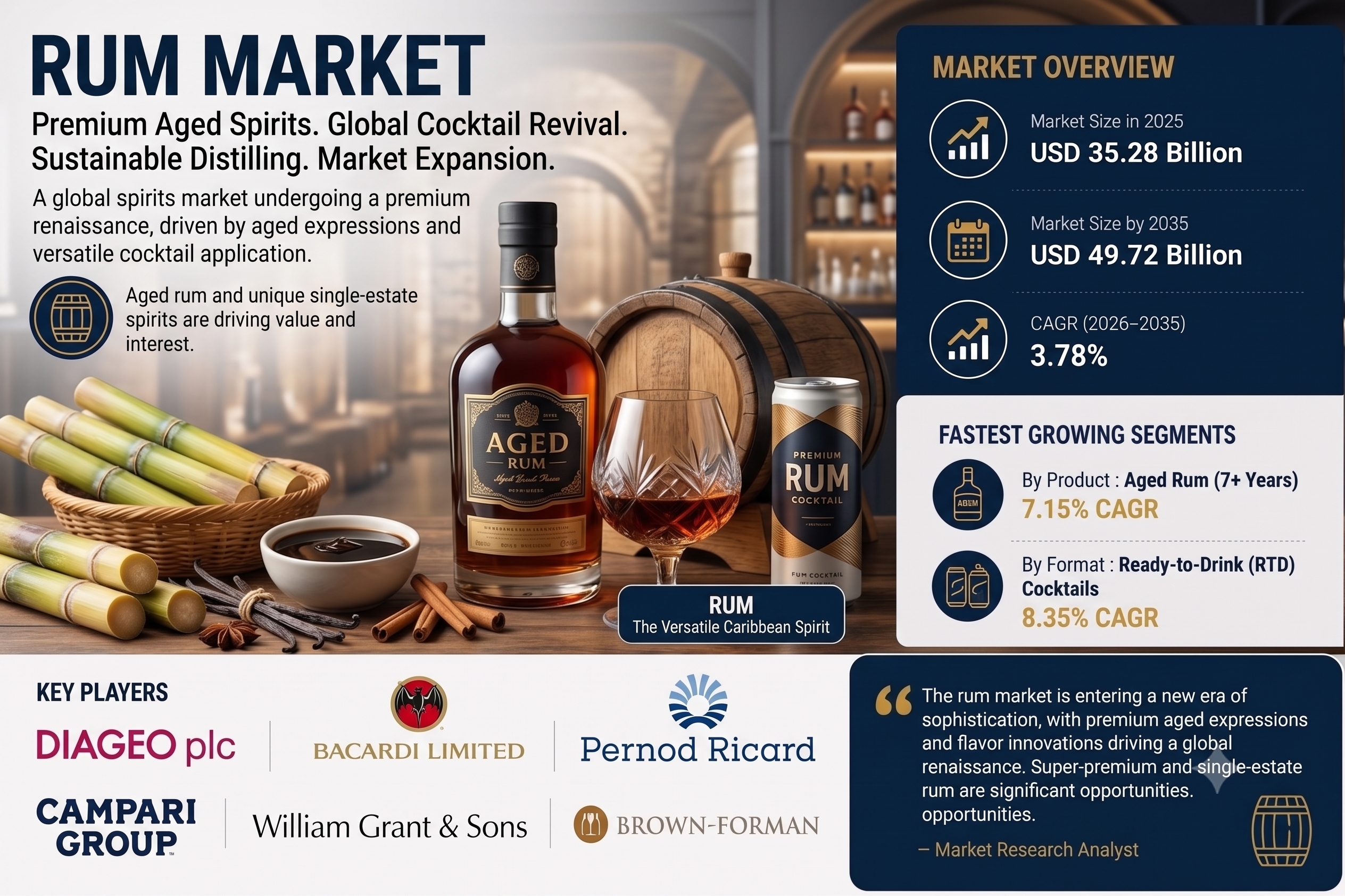
Rum Market
Premium aged rum, cocktail innovation, and expanding demand across emerging economies are expected to propel the global rum market at a 3.78% CAGR through 2035.
The rum market is evolving through premiumization, aged expressions, and cocktail innovation, creating new opportunities for brands across both mature and emerging markets.”
NEW YORK, NY, UNITED STATES, July 17, 2026 /EINPresswire.com/ -- The global Rum Market is poised for steady long-term growth as consumers increasingly embrace premium spirits, craft cocktails, and authentic heritage brands. According to Market Research Future (MRFR), the global Rum Market was valued at USD 35.28 Billion in 2025 and is projected to reach USD 49.72 Billion by 2035, registering a compound annual growth rate (CAGR) of 3.78% during the forecast period of 2026–2035.— Market Research Future (MRFR)
Rum, one of the world's oldest distilled spirits, continues to evolve beyond its traditional image as producers introduce premium expressions, aged variants, flavored innovations, and ready-to-drink (RTD) offerings that appeal to younger consumers. The industry's transformation is being supported by changing drinking preferences, increasing disposable incomes, tourism growth, expanding nightlife culture, and growing appreciation for artisanal spirits across developed and emerging markets alike. In addition, the category is benefiting from stronger brand storytelling, improved packaging, and a renewed focus on authenticity, all of which are helping rum compete more effectively with other premium spirits categories.
Premiumization Reshaping the Global Rum Industry
One of the strongest forces transforming the Rum Market is the ongoing premiumization trend. Consumers are increasingly willing to spend more on high-quality spirits that offer authentic craftsmanship, unique aging techniques, premium ingredients, and distinctive regional heritage. This shift is especially visible among urban consumers, affluent buyers, and spirits enthusiasts who are seeking products that deliver both taste and experience.
Premium and super-premium rum categories have experienced significant momentum over recent years as buyers seek products with richer flavor profiles and greater authenticity. Small-batch production, longer maturation periods, single-estate sourcing, and limited-edition releases are becoming major purchasing factors among enthusiasts and collectors. These attributes are helping brands move beyond price-based competition and instead compete on quality, provenance, and exclusivity.
Unlike traditional mass-market rum, premium offerings emphasize production transparency, barrel aging, terroir, and craftsmanship. This shift has encouraged producers worldwide to invest heavily in premium portfolios while repositioning rum alongside premium whisky, tequila, and cognac within the global spirits industry. As a result, rum is increasingly being viewed not only as a mixer but also as a sipping spirit suitable for fine dining, gifting, and luxury occasions.
The growing popularity of sipping rum rather than mixing it exclusively into cocktails further reflects changing consumer perceptions. As education around rum production increases, consumers are becoming more interested in tasting notes, barrel finishes, geographic origin, and production techniques. Distillers are responding by highlighting age statements, cask types, fermentation methods, and heritage narratives that help differentiate their products in a crowded marketplace.
Get Full PDF Sample Copy of Report: (Including Full TOC, List of Tables & Figures, Chart) @ https://www.marketresearchfuture.com/sample_request/7916
The Aged Rum Renaissance Accelerates Global Demand
The market is witnessing what industry analysts describe as the Aged Rum Renaissance, where older premium expressions are capturing significant consumer attention. This trend is reshaping how consumers perceive rum and is helping elevate the category into a more sophisticated segment of the global spirits market.
Aged rums are increasingly viewed as luxury products capable of competing with premium whiskies and cognacs. Distillers across the Caribbean, Latin America, Europe, and Asia are introducing aged portfolios ranging from 8-year to 30-year expressions. These products appeal to consumers who value complexity, smoothness, and the layered character that develops through long maturation in oak barrels.
Consumers appreciate the complex aromas, smooth finishes, oak influence, vanilla characteristics, caramel notes, and layered flavors created during long maturation periods. The sensory appeal of aged rum is particularly strong among consumers who enjoy neat pours or spirit-forward cocktails. This has encouraged bars, lounges, and specialty retailers to expand their premium rum selections and create more educational tasting experiences.
Luxury hospitality venues, premium bars, and specialist retailers have expanded their aged rum selections considerably over the past several years. This trend has elevated rum's overall brand perception while attracting affluent consumers seeking premium drinking experiences. In many markets, aged rum is now being positioned as a collectible spirit, with limited releases and cask-finished editions generating strong interest among connoisseurs.
The rising availability of educational tasting events, rum festivals, distillery tourism, and collector communities continues supporting higher-value sales worldwide. These experiences help consumers better understand the diversity of rum styles and encourage repeat purchases across premium tiers.
Cocktail Culture Driving On-Trade Recovery
Another major catalyst supporting market growth is the resurgence of cocktail culture across restaurants, hotels, bars, lounges, and entertainment venues. The on-trade channel remains a critical driver of rum consumption because it introduces consumers to new brands, new flavor profiles, and premium serving occasions.
As hospitality industries continue expanding globally, rum-based cocktails have regained popularity among younger legal-age consumers seeking experiential drinking occasions. Consumers are increasingly drawn to beverages that combine flavor, presentation, and social value, making rum a natural fit for modern cocktail menus.
Classic cocktails including Mojitos, Daiquiris, Mai Tais, Piña Coladas, Cuba Libres, and Rum Punch remain staples across global hospitality venues. Meanwhile, mixologists continue introducing innovative craft cocktails featuring premium aged rums, botanical infusions, tropical ingredients, smoked garnishes, and locally sourced fruits. This innovation is helping rum remain relevant in a highly competitive cocktail landscape where consumers are constantly seeking novelty and premium experiences.
Consumers increasingly associate premium cocktails with social occasions, celebrations, and luxury experiences. This has significantly increased premium rum consumption within the on-trade segment. In many urban markets, cocktail bars are using rum as a base for signature drinks that emphasize craftsmanship and storytelling, further strengthening the category's premium image.
Hospitality operators are also expanding rum-focused menus, tasting flights, and cocktail pairings, further increasing consumer awareness and product experimentation. These initiatives are especially effective in tourist destinations and upscale venues where consumers are more open to trying premium and imported spirits.
Flavor Innovation Attracting New Consumers
Flavor innovation has emerged as another important growth engine for the global Rum Market. As consumer preferences become more diverse, brands are using flavor development to broaden appeal and attract new drinkers into the category.
Manufacturers continue launching flavored rum varieties featuring coconut, pineapple, mango, passion fruit, vanilla, coffee, cinnamon, spiced botanicals, chocolate, citrus, and exotic tropical fruits. These products are particularly attractive to consumers who prefer sweeter, more approachable spirits or who are looking for beverages suited to casual social occasions.
These innovations help attract younger consumers entering the spirits category while broadening rum's appeal beyond traditional drinkers. Flavored rum is often seen as more accessible than some other spirits categories, making it a useful entry point for consumers who are still exploring their preferences.
Flavored products are particularly successful within casual social settings, beach destinations, music festivals, and seasonal celebrations where consumers seek approachable and refreshing beverages. Their versatility also makes them suitable for mixed drinks, frozen cocktails, and RTD formats, which further expands their commercial potential.
Innovation also enables brands to respond quickly to changing flavor preferences while differentiating themselves in an increasingly competitive spirits landscape. Producers that can balance novelty with quality are likely to gain the strongest traction in this segment.
Ready-to-Drink Rum Cocktails Create New Revenue Opportunities
Ready-to-drink (RTD) alcoholic beverages have become one of the fastest-growing segments within global beverage alcohol markets. This trend is reshaping distribution strategies and creating new opportunities for rum brands that want to reach convenience-driven consumers.
Rum-based canned cocktails now appeal to consumers seeking convenience without sacrificing quality. These products are especially popular among younger adults, outdoor consumers, and shoppers looking for portable beverages that are easy to serve and consistent in taste.
Manufacturers are introducing premium RTD Mojitos, Daiquiris, Cuba Libres, tropical punch cocktails, and sparkling rum beverages designed for outdoor events, sporting occasions, travel, and casual consumption. The category benefits from strong demand for premium convenience products that combine recognizable flavors with modern packaging.
Convenience, portability, consistent taste, and premium branding continue driving adoption among millennials and Generation Z consumers. These consumers often prefer products that fit active lifestyles and social occasions without requiring extensive preparation or mixing.
As retail distribution expands through supermarkets, convenience stores, liquor retailers, and online alcohol platforms, RTD rum cocktails are expected to become a major contributor to future market revenues. Brands that invest in attractive packaging, balanced formulations, and strong digital marketing are likely to benefit most from this trend.
Consumer Preferences Continue Evolving
Global drinking habits are changing significantly as consumers increasingly prioritize quality over quantity. This shift is influencing not only what consumers buy, but also how they evaluate brands and make purchasing decisions.
Rather than purchasing larger volumes of lower-priced spirits, many consumers now prefer fewer occasions featuring premium products. This behavior supports growth in higher-margin segments and encourages brands to focus on craftsmanship, authenticity, and premium presentation.
Health-conscious lifestyles have also encouraged moderation, leading consumers toward higher-quality alcoholic beverages that deliver superior drinking experiences. In this environment, consumers are more likely to choose a premium rum for a special occasion than a lower-cost alternative for routine consumption.
This shift benefits premium rum producers capable of delivering authentic stories, sustainable production methods, premium packaging, and exceptional craftsmanship. Brands that can communicate heritage, quality, and responsible production are likely to build stronger loyalty over time.
Transparency surrounding ingredients, production processes, environmental responsibility, and corporate sustainability has become increasingly important among younger consumers. Brands investing in sustainability initiatives, renewable energy, recyclable packaging, ethical sourcing, and carbon reduction programs are expected to strengthen long-term customer loyalty. These efforts are increasingly viewed not as optional extras but as core brand expectations in premium beverage categories.
Regional Market Outlook
North America remains one of the world's largest rum-consuming regions due to strong cocktail culture, premium spirit demand, and widespread retail availability. The region benefits from a mature spirits market, a large hospitality sector, and a consumer base that is increasingly open to premium and imported products.
The United States continues representing one of the largest premium rum markets globally as consumers increasingly explore craft spirits and luxury imported brands. Growth in the U.S. is being supported by premium cocktail bars, e-commerce alcohol sales, and a rising interest in aged and flavored rum expressions.
Europe is witnessing rising appreciation for aged rum, particularly across the United Kingdom, Germany, France, Spain, and Italy. Growing premium spirit consumption combined with sophisticated cocktail culture continues supporting steady market expansion throughout the region. European consumers are also showing greater interest in heritage brands and limited-edition releases, which is helping premium rum gain visibility in specialist retail and hospitality channels.
Latin America and the Caribbean remain central to global rum production and cultural heritage. Countries including Cuba, Jamaica, Barbados, Puerto Rico, Guatemala, Dominican Republic, and Venezuela continue producing internationally recognized premium rum brands while benefiting from strong tourism industries. These markets are not only important production hubs but also powerful brand storytellers, with origin and authenticity playing a major role in consumer appeal.
Asia-Pacific represents one of the fastest-growing consumption regions. Urbanization, rising disposable incomes, westernized lifestyles, expanding nightlife, international tourism, and premium alcohol consumption continue supporting strong demand across China, India, Japan, South Korea, Thailand, Vietnam, and Australia. The region offers significant long-term potential as consumers become more familiar with premium spirits and cocktail culture continues to expand.
Africa also presents significant long-term opportunities as economic development, urban population growth, expanding retail infrastructure, and increasing middle-class spending support higher premium alcohol consumption. As distribution networks improve and international brands expand their presence, the region is expected to become increasingly important for future rum sales.
Emerging Opportunities Shape Future Growth
Industry analysts identify several high-potential opportunities expected to define the Rum Market through 2035. These opportunities are likely to influence product development, channel strategy, and geographic expansion across the industry.
Super-Premium and Single-Estate Rum
Luxury consumers increasingly seek exclusive spirits with strong provenance and authentic production stories. Single-estate rum, limited editions, rare cask finishes, and premium collector releases are expected to deliver attractive profit margins while strengthening brand prestige. This segment is especially important for producers seeking to build long-term brand equity and differentiate themselves from mass-market competitors.
Ready-to-Drink Rum Cocktails
Premium canned cocktails continue expanding across supermarkets, convenience retail, travel retail, and e-commerce channels. Manufacturers investing in premium RTD innovation are expected to capture younger consumer segments while creating recurring purchase opportunities. The convenience and portability of RTD products make them especially attractive in fast-moving retail environments.
Expansion Across Africa and Southeast Asia
Rapid urbanization, tourism growth, expanding hospitality industries, and increasing disposable incomes position Africa and Southeast Asia among the industry's most promising emerging markets. Growing international brand presence alongside local production investments is expected to accelerate market penetration throughout the forecast period. These regions offer room for both premium imports and locally adapted products.
Competitive Landscape
The Rum Market remains highly competitive, with global companies investing heavily in premiumization, product innovation, sustainability initiatives, digital marketing, and strategic acquisitions. Competition is intensifying as brands seek to capture consumer attention across retail, hospitality, and online channels.
Major companies profiled in the Market Research Future report include:
• Diageo plc
• Bacardi Limited
• Pernod Ricard
• Campari Group
• William Grant & Sons
• Brown-Forman
Leading manufacturers continue strengthening distribution networks while expanding premium product portfolios across both mature and emerging markets. Their strategies often include portfolio diversification, heritage branding, limited-edition launches, and stronger engagement with bartenders, retailers, and consumers.
Strategic partnerships with hospitality companies, retailers, distributors, and e-commerce platforms are becoming increasingly important as consumer purchasing channels continue evolving. Investment in premium packaging, luxury branding, digital consumer engagement, experiential marketing campaigns, and sustainable production practices remains central to competitive differentiation.
Industry Outlook Through 2035
The outlook for the global Rum Market remains positive as premium spirits continue gaining popularity worldwide. While the category is mature in some regions, it still offers meaningful room for value growth through premiumization, innovation, and geographic expansion.
Premiumization, luxury positioning, cocktail culture, flavored innovation, sustainable production, and convenient ready-to-drink offerings are expected to redefine the category over the coming decade. These trends are likely to support both volume stability and value expansion, particularly in premium and super-premium segments.
As consumers increasingly value authenticity, craftsmanship, and memorable drinking experiences, rum producers are well positioned to capitalize on changing preferences through product innovation and strategic market expansion. Brands that can combine heritage with modern relevance are likely to perform especially well.
With the market projected to grow from USD 35.28 Billion in 2025 to USD 49.72 Billion by 2035, supported by a 3.78% CAGR, the industry is expected to deliver stable long-term opportunities for producers, distributors, investors, retailers, and hospitality businesses worldwide.
Discover Related Research Reports By Market Research Future:
RTD Alcoholic Beverages Market
https://www.marketresearchfuture.com/reports/rtd-alcoholic-beverages-market-7920
Alcoholic Ready to Drink RTD High Strength Premixes Market
https://www.marketresearchfuture.com/reports/alcoholic-ready-to-drink-rtd-high-strength-premixes-market-34783
Liqueur Market
https://www.marketresearchfuture.com/reports/liqueur-market-4606
Sagar Kadam
Market Research Future
+1 628-258-0071
email us here
Legal Disclaimer:
EIN Presswire provides this news content "as is" without warranty of any kind. We do not accept any responsibility or liability for the accuracy, content, images, videos, licenses, completeness, legality, or reliability of the information contained in this article. If you have any complaints or copyright issues related to this article, kindly contact the author above.
